Research
Research
The WCSNG agenda connects communication, sensing, robotics, and secure networked systems. The common pattern is to identify a hard systems bottleneck, build the missing stack end to end, and make the resulting capability usable in practice.
Research Map
Current focus areas
Each area below summarizes the direction of the work, the current system-level thrusts, and the most relevant code or dataset releases to explore next.

Wireless Sensing and Localization
Turn commodity WiFi, BLE, and UWB infrastructure into centimeter-scale sensing systems for indoor localization, robotics, SLAM, and secure spatial intelligence.
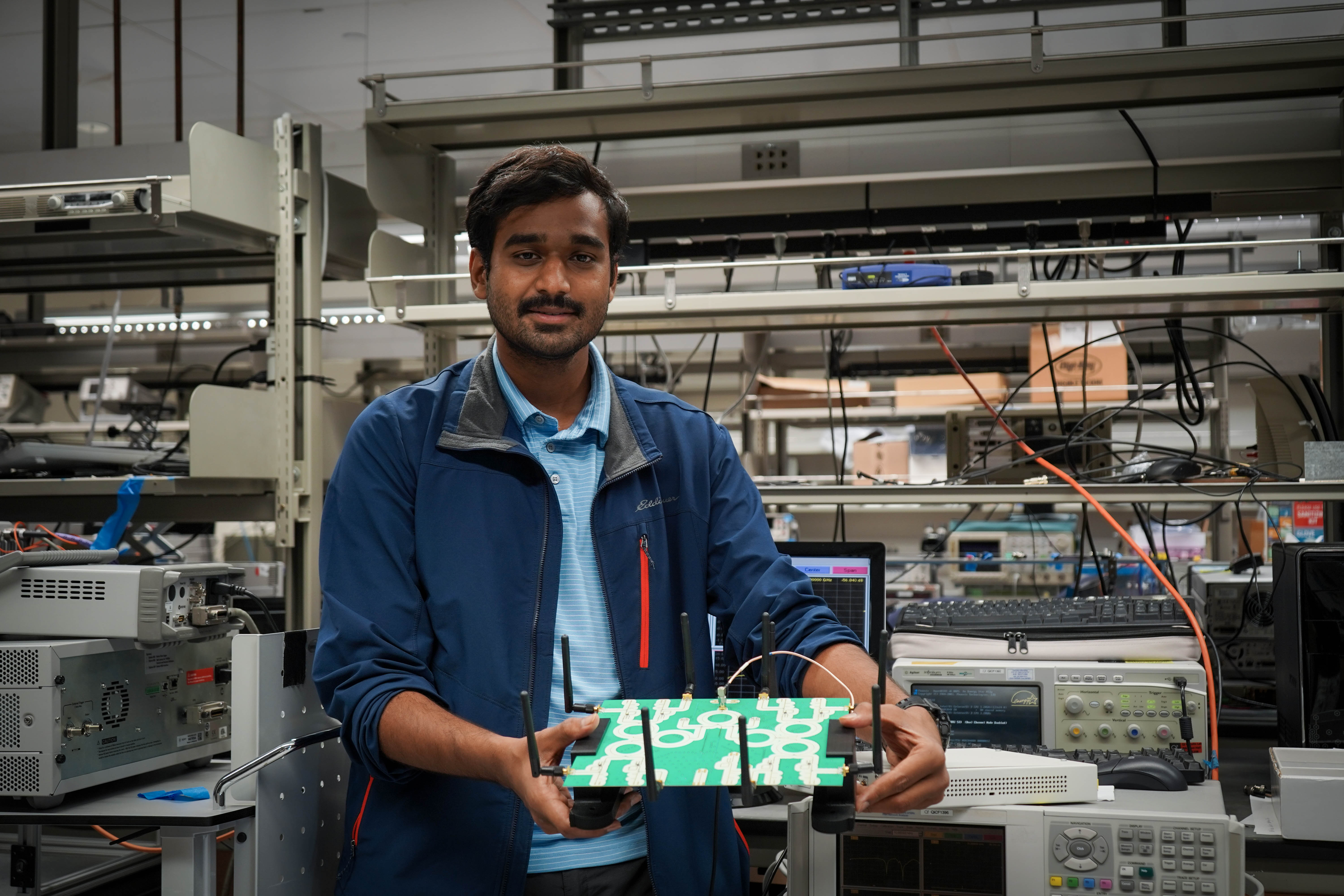
NextG Wireless Systems
Build the next generation of wireless systems around reliable mmWave links, sustainable MIMO, and real-time AI control inside programmable RANs.

Battery-Free IoT and Smart Surfaces
Push backscatter and smart-surface design toward ultra-low-power connectivity, battery-free sensing, and wireless environments that can actively shape propagation.
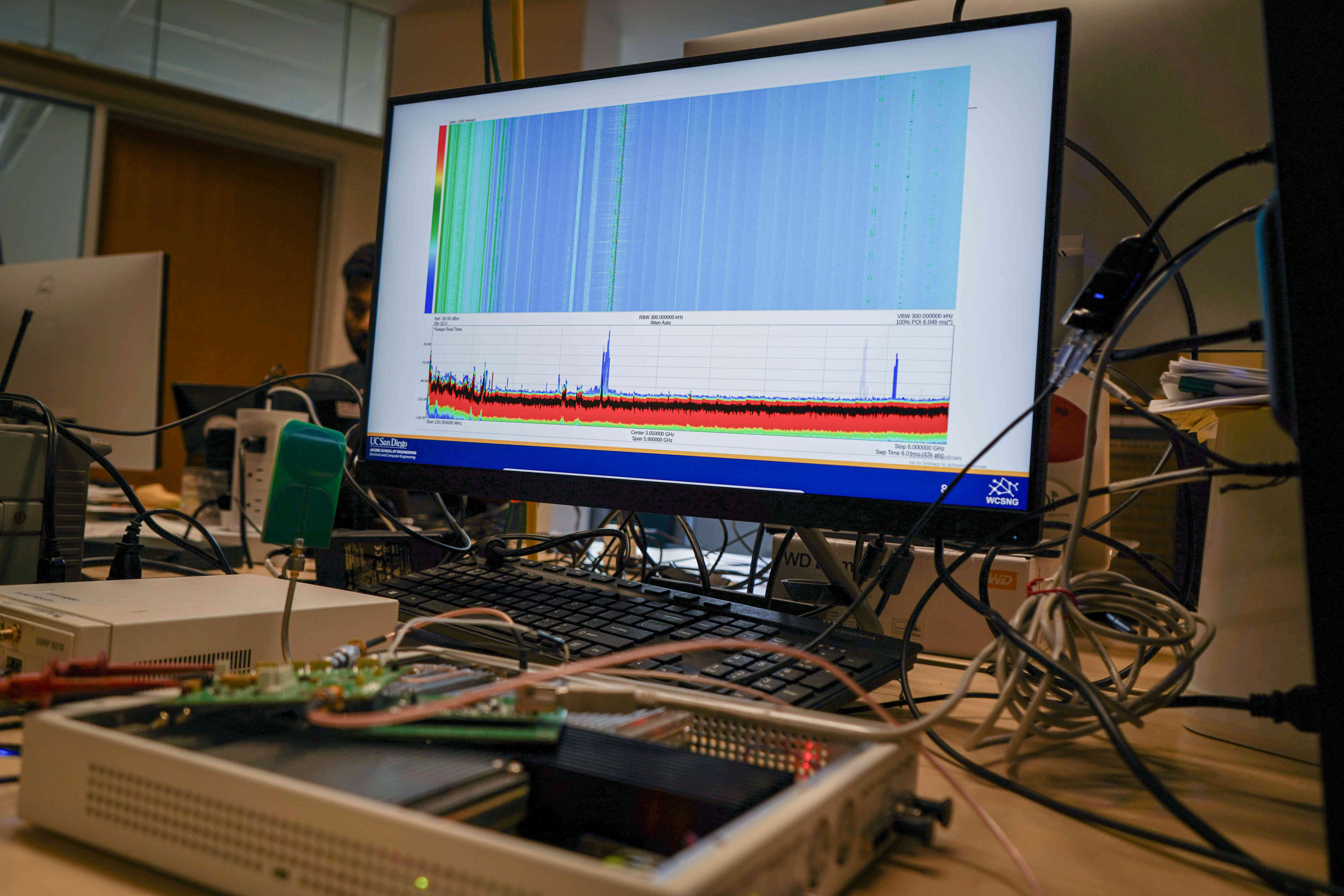
Spectrum Intelligence
Sense wide swaths of spectrum in real time, compress what matters, and build the data pipelines needed for spectrum-aware wireless systems.
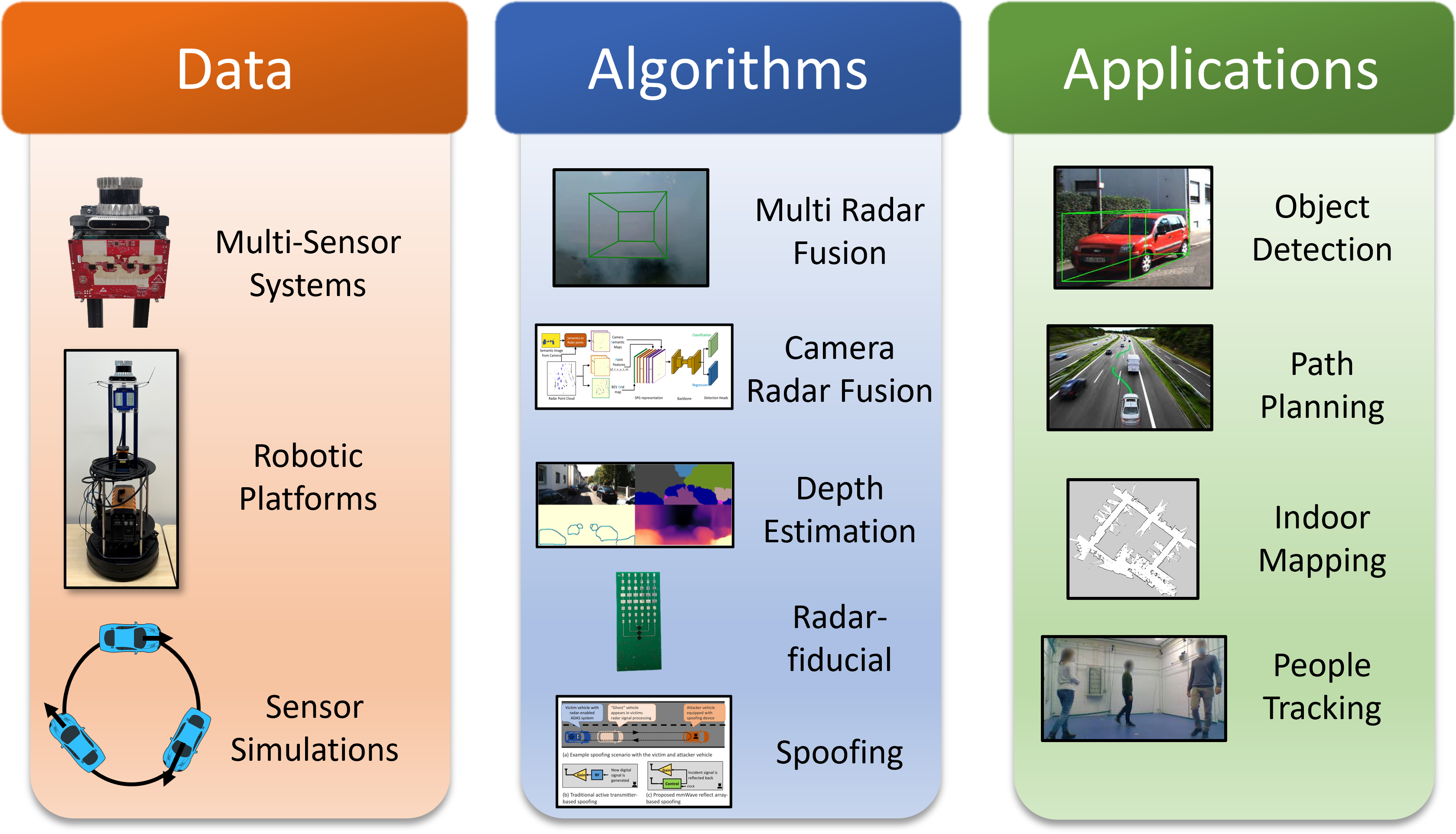
Autonomous Perception and Radar
Fuse radar, cameras, simulation, and learning to make autonomous perception more robust under weather, occlusion, and other failure modes of vision-only systems.
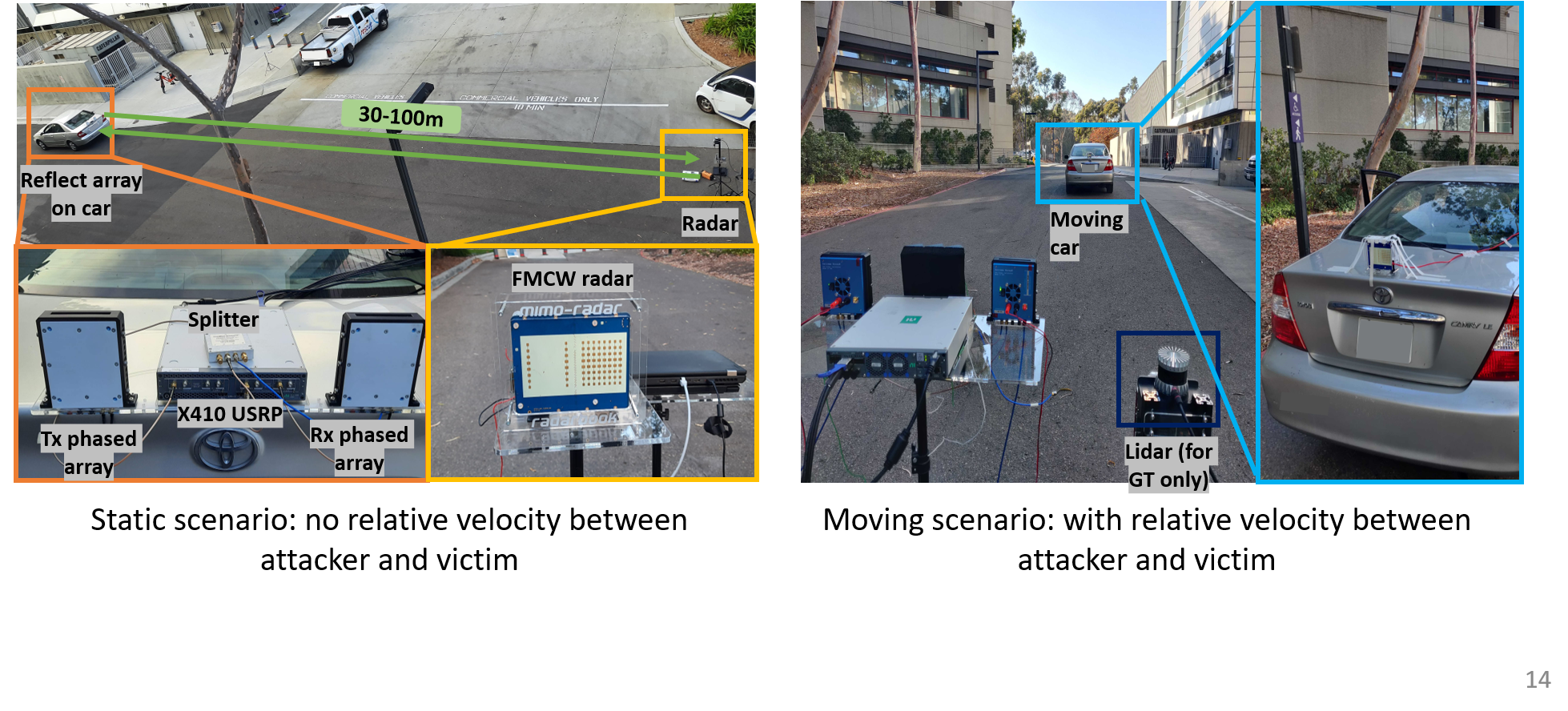
Wireless Security and Privacy
Expose how wireless systems can be fingerprinted, jammed, spoofed, or tracked, then build defenses that preserve both reliability and privacy.
Details
Area-by-area view
Current focus
Wireless Sensing and Localization
Turn commodity WiFi, BLE, and UWB infrastructure into centimeter-scale sensing systems for indoor localization, robotics, SLAM, and secure spatial intelligence.
Current thrusts
- Centimeter-scale localization and tracking with WiFi, BLE, and UWB.
- WiFi sensing toolchains and SLAM pipelines for robots and warehouse systems.
- Security- and privacy-aware sensing systems that remain robust in real environments.
Researchers
Representative resources
Current focus
NextG Wireless Systems
Build the next generation of wireless systems around reliable mmWave links, sustainable MIMO, and real-time AI control inside programmable RANs.
Current thrusts
- Sustainable dense 6G networks built around low-power MIMO and virtualization.
- Reliable mmWave systems that use multi-beam designs and cross-domain sensing.
- Sub-millisecond AI control and optimization for open and programmable RAN stacks.
Researchers
Representative resources
Current focus
Battery-Free IoT and Smart Surfaces
Push backscatter and smart-surface design toward ultra-low-power connectivity, battery-free sensing, and wireless environments that can actively shape propagation.
Current thrusts
- Ultra-low-power communication using WiFi, BLE, and other commodity infrastructure.
- Smart surfaces that shape propagation and increase multiplexing in wireless links.
- Battery-free sensing systems that recover force and other physical interactions from backscatter.
Researchers
Representative resources
Current focus
Spectrum Intelligence
Sense wide swaths of spectrum in real time, compress what matters, and build the data pipelines needed for spectrum-aware wireless systems.
Current thrusts
- Low-cost wideband sensing architectures with strong time and frequency resolution.
- Backhaul- and compute-efficient processing for large spectrum sensor deployments.
- Synthetic and real RF data generation for modern spectrum information systems.
Researchers
Representative resources
Current focus
Autonomous Perception and Radar
Fuse radar, cameras, simulation, and learning to make autonomous perception more robust under weather, occlusion, and other failure modes of vision-only systems.
Current thrusts
- Multi-modal data collection across radar, camera, LiDAR, GPS, IMUs, and simulation.
- Algorithms for robust perception, sensor fusion, and end-to-end autonomy.
- Applications spanning warehouse automation, outdoor driving, and infrastructure sensing.
Researchers
Representative resources
Current focus
Wireless Security and Privacy
Expose how wireless systems can be fingerprinted, jammed, spoofed, or tracked, then build defenses that preserve both reliability and privacy.
Current thrusts
- Attacks and defenses for BLE, WiFi, mmWave, and automotive radar systems.
- Detection of hidden or fingerprintable wireless devices from physical-layer signatures.
- Privacy-preserving localization and robust wireless operation under adversarial conditions.